
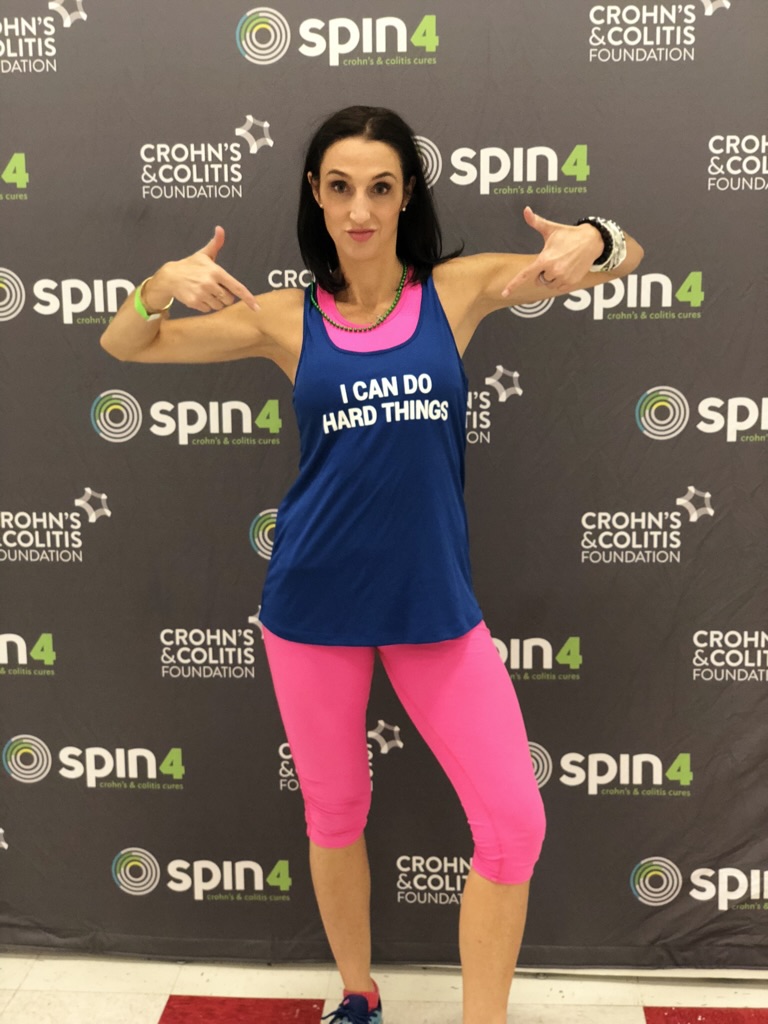
Confidence is easy when things are going well. You got the job. The client said yes. The deals are closing. Of course you feel confident, the world is handing you evidence that says keep going, you're doing it right. But what about when it isn't? What about when you're qualified and still haven't gotten the offer? When you know you're good at what you do and four deals fall apart in the same week? When the phone suddenly feels like it weighs 5,000 pounds and you can't make yourself pick it up? Those are the moments we tell ourselves we've lost our confidence. I don't think we have. I think those are the moments we find out what our confidence was actually built on.
What Are You Making It Dependent On?
I asked a room full of accomplished leaders this question recently: what are you making your confidence dependent on? The answers were different on the surface. Results. Approval. Perfection. Preparation. Other people's reactions. Underneath, they were all the same thing: proof. That creates a brutal paradox. The moment you need confidence most is usually the exact moment you have the least evidence available to support it. You don't need confidence in your employability the day someone offers you the job. You need it after the fifth rejection. It's easy to believe you're good at sales when everyone's calling you back. You need that belief when the phone weighs 5,000 pounds. Confidence was never the feeling that shows up after the evidence arrives. It's the thing that lets you keep moving while you're waiting for it, if it ever comes at all.
You Cannot Lose. You Cannot Make a Mistake.
There's a mindset shift that changes this entirely: a mastery orientation. Someone operating from mastery isn't measuring outcomes, they're measuring whether they got closer to who they're trying to become, and every experience, wins and losses both, counts toward that. From here, you genuinely cannot lose and you cannot make a mistake. Every result is just data. Sometimes losing an account teaches you more than winning one would have. That's not a positive-thinking trick. It's a different question entirely. Outcome orientation asks did I get the result. Mastery orientation asks did I get closer. One of those can be answered by circumstances completely outside your control. The other can't.
Esteemable Acts Build Self-Esteem
I learned that phrase in recovery years ago, and I've said it hundreds of times since. We tend to think the order runs the other way: first I'll feel confident, then I'll make the call. First I'll believe I'm capable, then I'll put myself forward. It doesn't usually work that way. One leader in my mastermind described exactly this. When business slows down and rejection piles up, his solution isn't to sit there trying to manufacture confidence. He calls one of his best clients, not to sell anything, just to reconnect with someone he trusts. Then another call. Eventually the phone weighs what a phone is supposed to weigh again. But "just take action" isn't quite the full answer either. For some of us, fear doesn't make us stop working, it makes us work more. Grind harder. Do more. If that's your pattern, the esteemable act might actually be closing the laptop and trusting that you've done enough for today. The real move is whatever action interrupts your specific pattern, not a generic instruction to hustle. The act comes first either way. The feeling catches up after.
Confidence Is Not Certainty
Certainty says: I know this will work. Confidence says: I trust myself enough to find out. Certainty is seductive because it removes the risk. If you knew the business would succeed, of course you'd invest in it. But life almost never hands you certainty at the exact moment a real decision has to be made, the evidence usually arrives afterward, if it arrives at all. Confidence isn't pretending you know how it ends. It's trusting your ability to respond to whatever happens next, without needing to know first.
Don't Confuse a Bad Result With Bad Data
Sometimes, to be fair, the evidence is telling you something real. If you apply for two hundred jobs and get zero interviews, confidence doesn't mean applying to two hundred more exactly the same way. Confidence shouldn't make you delusional. It should make you resilient enough to look at the data without turning it into an indictment of who you are. That's the difference between this didn't work and I don't work. I asked one leader who was mid-slump, doubting himself after a string of deals that hadn't converted, a simple question: what do you know about yourself that you're forgetting right now? He didn't hesitate. That I'm good at what I do. The problem was never a lack of evidence. Twenty years of it existed. The most recent result had just become the loudest voice in the room. We all do this. One rejection outweighs two decades of competence. One bad quarter becomes a referendum on the whole business. Confidence doesn't require ignoring reality. Sometimes it requires remembering all of it, not just the last five minutes of it.
The Question Worth Asking
Not "how do I become more confident." Try this instead: what do I know about myself that I tend to forget when the evidence goes quiet? And then: what would I do today if I remembered? That's the whole practice. Not a five-year plan. A sentence you can reach for the next time you're waiting for proof that was never going to arrive before you were allowed to begin.
Want to explore how these structures operate in your own professional and personal life? The Babcock Method is designed to uncover and rewrite these cycles.


Stop. You're Doing it Wrong.
You feel stuck, so you take action: new job, new relationship, new plan. But action isn't the same thing as progress. Here's why the fastest way to actually change your life starts with the one step almost everyone skips.

The high cost of being the reliable one.
If you are the person who always gets things done, you have likely built a life you are tired of running. Let's talk about the trap of usefulness.
Start with diagnosis
This is where clarity
begins.
If you’re done performing and ready to see what’s actually there.
The Discovery Call is the right place to start.
©2026, Rebecca Babcock Coaching.